
TRADITIONAL CRAFTS & MAKERS · AUSTRIA
Swarovski
Crystal cut with machine precision in the Tyrol since 1895
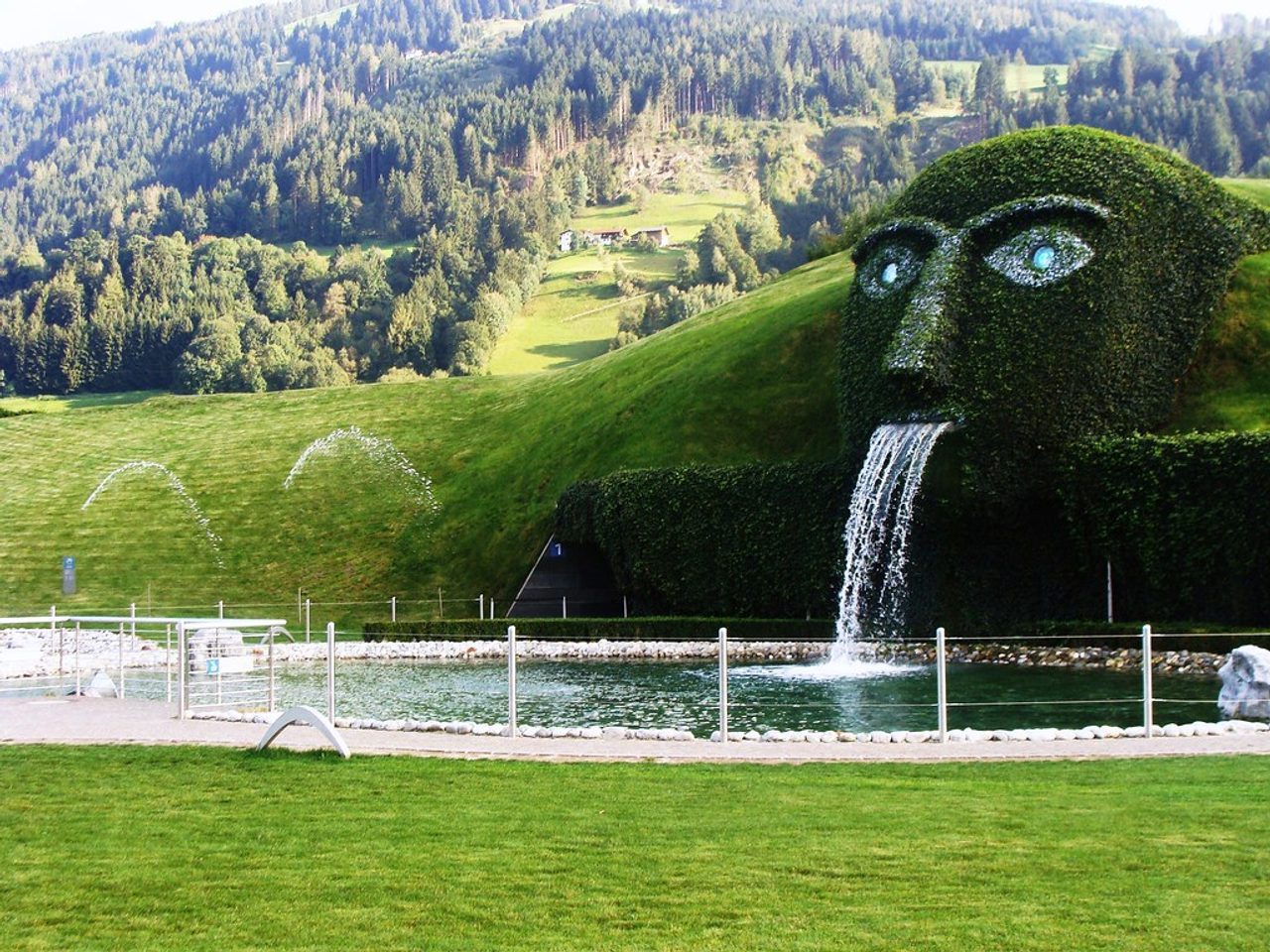
Photograph · Kristallwelten in Wattens — “Swarovski Kristallwelten Innsbruck” by KLMircea — CC BY-SA 2.0 · Credits
01 In brief
In 1895 Daniel Swarovski, a Bohemian glass-cutter's son who had patented an electric crystal-cutting machine three years earlier, settled in Wattens in the Tyrol and founded the firm that still bears his name. The choice of an Alpine valley was deliberate: water power for the cutting machines, and rail access to the markets of the world.
Precision cutting remains the company's identity, and the house is still family-owned. For its centenary in 1995 it opened Swarovski Kristallwelten — a visitors' world of crystal chambers designed by the artist André Heller — which has become one of Austria's most visited attractions and the public face of a global brand.
02 Why it's interesting
- 01 Swarovski industrialised a craft: machine cutting so exact that crystal could be produced to jewellery-grade geometry at scale — thousands of identical facets where a hand-cutter would leave hundreds of approximations.
- 02 The company's founding move is a case study in Alpine industrial location: hydropower, valley labour and rail freight combining to carry a Bohemian craft tradition into the mountains.
- 03 Kristallwelten, opened in October 1995, reinterprets crystal through contemporary art and design for each generation — a museum that treats a material rather than a collection as its subject.
- 04 The group diversified with characteristic precision: Swarovski Optik builds binoculars and spotting scopes prized by naturalists, while Tyrolit abrasives grind and cut in industry worldwide.
03 How it works
Cut crystal is geometry: the angles at which facets meet determine how light enters, reflects and leaves the stone. Swarovski's founding insight was that a machine could hold those angles with a repeatability no human hand could match.
The founder's 1892 patent combined electric power with a cutting wheel advanced at controlled angles — the technical foundation of the firm's quality. Uniform facets, polished to optical smoothness, mean light is handled coherently across thousands of stones; the composition of the crystal itself, still a closely guarded recipe, determines how strongly that light bends inside each facet.
The same precision culture runs through the wider group: Swarovski Optik's binoculars and telescopes must resolve a bird's plumage at dawn, while Tyrolit's bonded abrasives must cut stone and steel to tolerance. Different products, one discipline — controlled geometry where material meets light or work.
| Founded | 1895, Wattens (Tyrol) |
|---|---|
| Founder | Daniel Swarovski (Bohemia → Tyrol) |
| Founding patent | Electric crystal-cutting machine, 1892 |
| Ownership | Family-owned, five generations |
| Kristallwelten | Opened October 1995 (André Heller) |
| Group branches | Crystal · Swarovski Optik · Tyrolit |
Dates per Swarovski's published brand history.
04 The organisation behind it
Swarovski remains a family enterprise headquartered in Wattens, where the founding family still controls the group across five generations. That continuity is rare among consumer brands of its age, and it keeps decision-making — and a large share of production — anchored in the Inn valley rather than moved to fashion capitals.
05 In the real world
Swarovski crystal reached everywhere a sparkle was wanted — runways, stages, chandeliers and shop windows worldwide. In the Tyrol, the company is an economic pillar of the Inn valley: Kristallwelten draws visitors to Wattens the way the mountains draw them to the rest of the country.
06 Can you visit?
Swarovski Kristallwelten in Wattens is open to the public for most of the year — its Chambers of Wonder, the Giant and its garden, exhibitions and shopping; check current hours and tickets on the official website.
Wattens is a short train or car ride from Innsbruck, which makes a convenient base for combining the visit with the Tyrol's Alpine sights.