
ADVANCED MANUFACTURING · LIECHTENSTEIN
Ivoclar Vivadent
A century of dental materials, from artificial teeth to digital dentistry
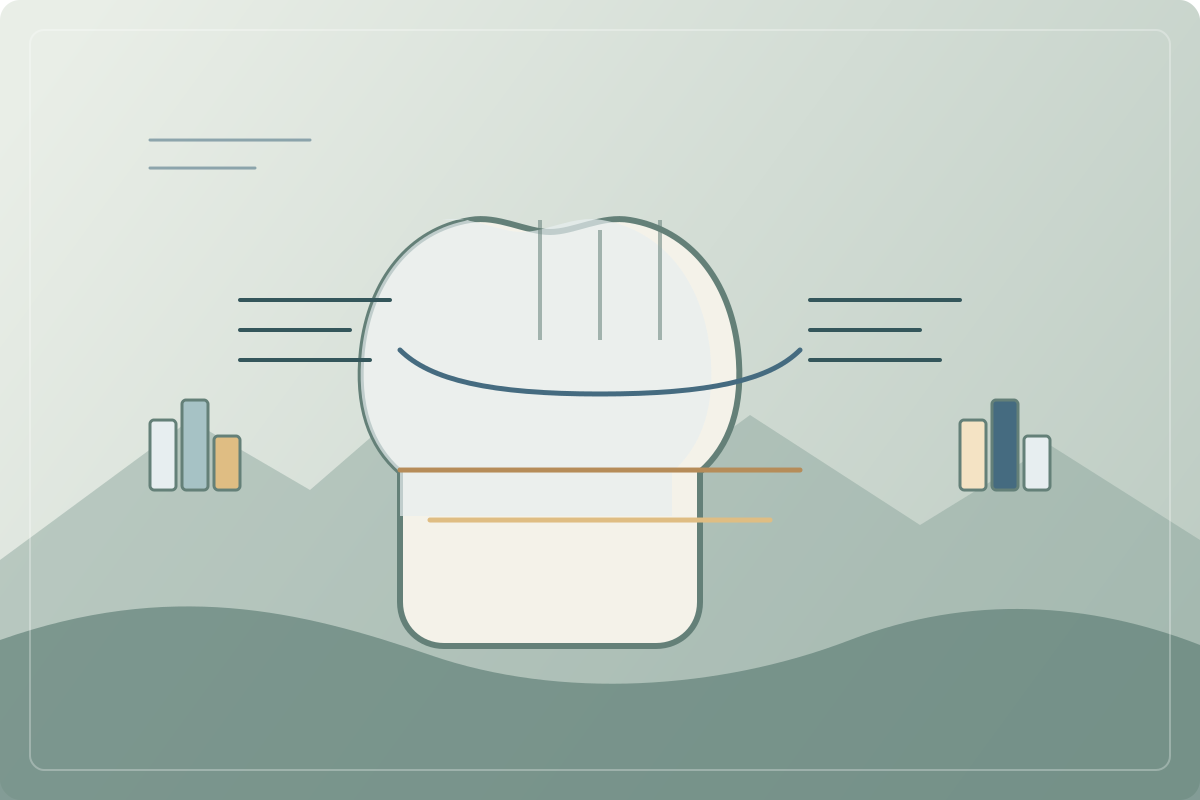
Original schematic illustration · created for the Atlas — stylised technical drawing, not a photograph.
01 In brief
Ivoclar was founded in Zurich in 1923 as a maker of artificial teeth; in 1933 it relocated to the Principality of Liechtenstein, where it has been domiciled ever since. What began as a specialised producer of denture teeth grew into one of the world's leading dental-materials companies — today's Ivoclar Group, headquartered in Schaan, develops and manufactures the ceramics, composites, adhesives and digital workflow systems used in dental practices and laboratories worldwide.
The company's century parallels the history of modern restorative dentistry: from porcelain denture teeth through metal-ceramics and light-cured composites to today's CAD/CAM-milled and pressed high-strength glass ceramics and fully digital case workflows.
02 Why it's interesting
- 01 It is materials science in the service of smiles: matching translucency, shade and strength of natural tooth structure is a problem in optics, chemistry and mechanics at once.
- 02 A Liechtenstein company achieving global reach in a specialized medical field is the principality's industrial story in miniature — alongside Hilti, Ivoclar anchors Schaan's role as an unexpected hub of advanced manufacturing.
- 03 For a hundred years the company has moved repeatedly to the newest material generation — an unusually sustained record of self-reinvention in a conservative industry.
- 04 Dental labs and clinics depend on its ecosystem: materials plus processing equipment plus shade systems plus training, all designed to work together.
03 How it works
Modern dental restorations are engineered materials with demanding, conflicting requirements.
A crown must be strong enough to chew, stiff enough to keep its shape, translucent and shaded like enamel, chemically stable in the mouth, and precisely fitting to a margin of tens of microns. Glass-ceramics (such as the company's well-known IPS e.max family) and composite resins are formulated to balance these demands.
Light-cured composites polymerize on command: a paste of resin matrix and glass/ceramic fillers hardens when illuminated at the right wavelength — which is why curing lamps and layering techniques matter as much as the material itself.
Digital workflows close the loop: intraoral scanners capture the tooth, software designs the restoration, milling or pressing machines produce it from industrial blocks, and controlled firing gives it its final strength — a manufacturing chain miniaturized to the scale of a single tooth.
| Founded | 1923 (Zurich) |
|---|---|
| Domiciled in Liechtenstein | Since 1933 |
| Headquarters | Schaan, Liechtenstein |
| Core fields | Ceramics · composites · adhesives · prosthetics · digital workflows |
Company history per Ivoclar's official publications.
04 The organisation behind it
The Ivoclar Group is a privately held dental company headquartered in Schaan, with production and sales organizations across the world's dental markets. Its identity couples industrial manufacturing with continuous professional education — generations of dental technicians and dentists have trained on its systems.
05 In the real world
Ivoclar materials are used daily in restorations — crowns, bridges, veneers, inlays, fillings and full dentures — and in the aesthetic and functional rehabilitation of millions of patients. The company's systems also shape how dental work is taught and standardized globally.
06 Can you visit?
The Schaan campus is a production and education site for the dental profession rather than a public attraction; activities there focus on training courses for dental professionals.
Visitors to Liechtenstein can nonetheless appreciate the point: this small industrial campus in the Rhine valley supplies dental practices on every continent.